
Global EV Comparison: Xiaomi SU7 Base vs Volkswagen ID.7 Pro S
Struggling to Decide? Let AI Help!
Your AI Summary Is Ready!
General Info
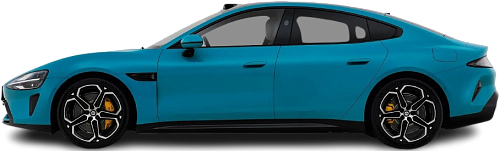
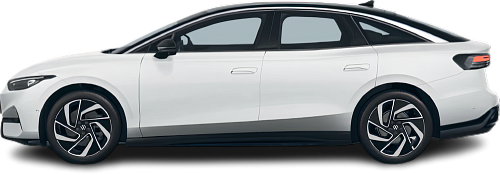
Both vehicles are currently in production and can be purchased new. The Xiaomi SU7 (2024-...) has a starting price of €27832, compared to the Volkswagen ID.7 Pro S (2024-…), which starts at €59095.
The Xiaomi SU7 (2024-...) is a Sedan, whereas the Volkswagen ID.7 Pro S (2024-…) is a Liftback.
| Property | Xiaomi SU7 Base | Volkswagen ID.7 Pro S |
|---|---|---|
| Years of Production | 2024-… | 2024-… |
| Current Status | Produced | Produced |
| Country of Manufacture | China | Germany |
| Body Style | Sedan | Liftback |
| Market Availability | EU | EU |
| Price Europe (New) | €27832 | €59095 |
| Price Europe (Used) | - Price Europe (Used) | €57930 |
| GCC Score | 6.9 | 7.3 |
Range and Efficiency
The Volkswagen ID.7 Pro S (2024-…) boasts a greater real-world range, a larger battery, and superior energy efficiency compared to the Xiaomi SU7 (2024-...).
| Property | Xiaomi SU7 Base | Volkswagen ID.7 Pro S |
|---|---|---|
| Range (WLTP) | 560 km | 709 km |
| Range (GCC) | 476 km | 593 km |
| Battery Capacity (Nominal) | 76.8 kWh | 91 kWh |
| Battery Capacity (Usable) | 73.6 kWh | 86 kWh |
| Efficiency per 100 km | 15.5 kWh/100 km | 14.5 kWh/100 km |
| Efficiency per kWh | 6.47 km/kWh | 6.9 km/kWh |
| Range and Efficiency Score | 8.5 | 9.9 |
Charging
Both vehicles utilize a standard 400-volt architecture.
The Volkswagen ID.7 Pro S (2024-…) offers faster charging speeds at DC stations, reaching up to 200 kW, while the Xiaomi SU7 (2024-...) maxes out at 170 kW.
Both vehicles are equipped with the same on-board charger, supporting a maximum AC charging power of 11 kW.
| Property | Xiaomi SU7 Base | Volkswagen ID.7 Pro S |
|---|---|---|
| Max Charging Power (AC) | 11 kW | 11 kW |
| Max Charging Power (DC) | 170 kW | 200 kW |
| Architecture | 400 V | 400 V |
| Charge Port | CCS Type 2 | CCS Type 2 |
| Charging Score | 6.5 | 7 |
Performance
Both vehicles are rear-wheel drive.
The Xiaomi SU7 (2024-...) boasts greater motor power and accelerates faster from 0 to 100 km/h.
| Property | Xiaomi SU7 Base | Volkswagen ID.7 Pro S |
|---|---|---|
| Drive Type | RWD | RWD |
| Motor Type | PMSM | PMSM |
| Motor Power (kW) | 220 kW | 210 kW |
| Motor Power (hp) | 295 hp | 282 hp |
| Motor Torque | 400 Nm | 560 Nm |
| 0-100 km/h | 5.3 s | 6.6 s |
| Top Speed | 210 km/h | 180 km/h |
| Performance Score | 5 | 4.7 |
Dimensions
The Xiaomi SU7 (2024-...) has a wider body, offering a more shoulder room, while the Volkswagen ID.7 Pro S (2024-…) stands taller for a more elevated driving position. Despite these differences, their lengths are nearly identical.
Both models have similar wheelbase lengths.
| Property | Xiaomi SU7 Base | Volkswagen ID.7 Pro S |
|---|---|---|
| Length | 4997 mm | 4961 mm |
| Width (with Mirrors) | - Width (with Mirrors) | 2141 mm |
| Width (w/o Mirrors) | 1963 mm | 1862 mm |
| Height | 1455 mm | 1536 mm |
| Wheelbase | 3000 mm | 2971 mm |
Cargo and Towing
A frunk (front trunk) is available in the Xiaomi SU7 (2024-...), but the Volkswagen ID.7 Pro S (2024-…) doesn’t have one.
The Volkswagen ID.7 Pro S (2024-…) has a towing capacity of up to 1000 kg, whereas the Xiaomi SU7 (2024-...) is not officially rated for towing in the EU.
| Property | Xiaomi SU7 Base | Volkswagen ID.7 Pro S |
|---|---|---|
| Number of Seats | 5 | 5 |
| Curb Weight | 1980 kg | 2230 kg |
| Cargo Volume (Trunk) | 517 l | 532 l |
| Cargo Volume (Max) | - Cargo Volume (Max) | 1586 l |
| Cargo Volume (Frunk) | 105 l | - Cargo Volume (Frunk) |
| Towing Capacity | - Towing Capacity | 1000 kg |
| Cargo and Towing Score | 5.3 | 6 |