
Global EV Comparison: BMW i4 M50 vs i3 BEV 94 Ah
Struggling to Decide? Let AI Help!
Your AI Summary Is Ready!
General Info
Since both vehicles have been discontinued, they are now only available on the used car market. You can get the BMW i4 M50 (2021-2024) for as low as €47700, while the BMW i3s BEV 94 Ah (2017-2018) begins at €18125.
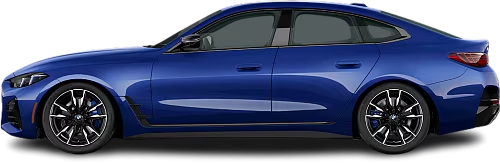
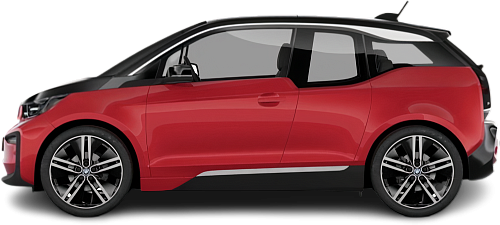
The BMW i4 M50 (2021-2024) is a Liftback, whereas the BMW i3s BEV 94 Ah (2017-2018) is a Hatchback.
| Property | BMW i4 M50 | BMW i3s BEV 94 Ah |
|---|---|---|
| Years of Production | 2021-2024 | 2017-2018 |
| Current Status | Discontinued | Discontinued |
| Country of Manufacture | Germany | Germany |
| Body Style | Liftback | Hatchback |
| Market Availability | EU, USA | EU, USA |
| Price Europe (Used) | €47700 | €18125 |
| GCC Score | 6.5 | 5 |
Range and Efficiency
While the BMW i4 M50 (2021-2024) offers a longer real-world range and a bigger battery, it is less energy-efficient than the BMW i3s BEV 94 Ah (2017-2018).
| Property | BMW i4 M50 | BMW i3s BEV 94 Ah |
|---|---|---|
| Range (EPA) | 435 km | 172 km |
| Range (WLTP) | 519 km | - Range (WLTP) |
| Range (GCC) | 409 km | 187 km |
| Battery Capacity (Nominal) | 83.9 kWh | 33.2 kWh |
| Battery Capacity (Usable) | 80.7 kWh | 27.2 kWh |
| Efficiency per 100 km | 19.7 kWh/100 km | 14.5 kWh/100 km |
| Efficiency per kWh | 5.07 km/kWh | 6.88 km/kWh |
| Range and Efficiency Score | 6.3 | 5.8 |
Charging
Both vehicles utilize a standard 400-volt architecture.
The BMW i4 M50 (2021-2024) offers faster charging speeds at DC stations, reaching up to 207 kW, while the BMW i3s BEV 94 Ah (2017-2018) maxes out at 50 kW.
The BMW i4 M50 (2021-2024) features a more powerful on-board charger, supporting a maximum AC charging power of 11 kW, whereas the BMW i3s BEV 94 Ah (2017-2018) is limited to 7.4 kW.
| Property | BMW i4 M50 | BMW i3s BEV 94 Ah |
|---|---|---|
| Max Charging Power (AC) | 11 kW | 7.4 kW |
| Max Charging Power (DC) | 207 kW | 50 kW |
| Architecture | 400 V | 400 V |
| Charge Port | CCS Type 2 | CCS Type 2 |
| Charging Score | 6.9 | 4 |
Performance
The BMW i3s BEV 94 Ah (2017-2018) is rear-wheel drive, while the BMW i4 M50 (2021-2024) offers an all-wheel drive system.
The BMW i4 M50 (2021-2024) boasts greater motor power and accelerates faster from 0 to 100 km/h.
| Property | BMW i4 M50 | BMW i3s BEV 94 Ah |
|---|---|---|
| Drive Type | AWD | RWD |
| Motor Type | PMSM (front), PMSM (rear) | PMSM |
| Motor Power (kW) | 400 kW | 135 kW |
| Motor Power (hp) | 536 hp | 181 hp |
| Motor Torque | 795 Nm | 270 Nm |
| 0-100 km/h | 3.9 s | 6.9 s |
| Top Speed | 225 km/h | 160 km/h |
| Performance Score | 6.8 | 3.5 |
Dimensions
The BMW i4 M50 (2021-2024) is longer and wider, but the BMW i3s BEV 94 Ah (2017-2018) is taller.
The BMW i4 M50 (2021-2024) boasts a more extended wheelbase.
| Property | BMW i4 M50 | BMW i3s BEV 94 Ah |
|---|---|---|
| Length | 4783 mm | 4006 mm |
| Width (with Mirrors) | 2073 mm | 2039 mm |
| Width (w/o Mirrors) | 1852 mm | 1791 mm |
| Height | 1448 mm | 1590 mm |
| Wheelbase | 2856 mm | 2570 mm |
Cargo and Towing
The BMW i4 M50 (2021-2024) provides more cargo capacity, featuring both a larger trunk and more space with the rear seats folded.
Neither car is equipped with a frunk (front trunk).
The BMW i4 M50 (2021-2024) has a towing capacity of up to 1600 kg, whereas the BMW i3s BEV 94 Ah (2017-2018) is not officially rated for towing in the EU.
| Property | BMW i4 M50 | BMW i3s BEV 94 Ah |
|---|---|---|
| Number of Seats | 5 | 4 |
| Curb Weight | 2290 kg | 1340 kg |
| Cargo Volume (Trunk) | 470 l | 260 l |
| Cargo Volume (Max) | 1290 l | 1100 l |
| Cargo Volume (Frunk) | - Cargo Volume (Frunk) | - Cargo Volume (Frunk) |
| Towing Capacity | 1600 kg | - Towing Capacity |
| Cargo and Towing Score | 5 | 4.3 |