
Global EV Comparison: XPENG P7 Wing Edition vs Honda e Advance
Struggling to Decide? Let AI Help!
Your AI Summary Is Ready!
General Info
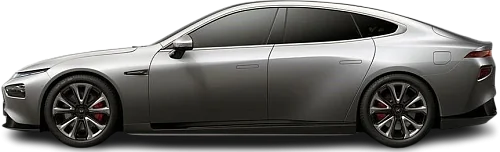
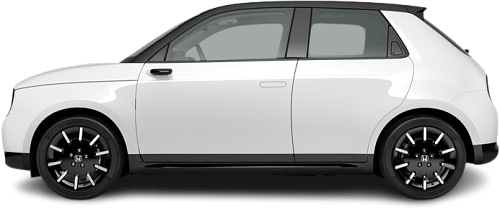
The XPENG P7 Wing Edition (2023-…) is currently produced, it has a starting price of €69600. The Honda e Advance (2020-2023) has been discontinued. You can find it for as low as €16900 on the used car market.
The XPENG P7 Wing Edition (2023-…) is a Sedan, whereas the Honda e Advance (2020-2023) is a Hatchback.
| Property | XPENG P7 Wing Edition | Honda e Advance |
|---|---|---|
| Years of Production | 2023-… | 2020-2023 |
| Current Status | Produced | Discontinued |
| Country of Manufacture | China | Japan |
| Body Style | Sedan | Hatchback |
| Market Availability | EU | EU |
| Price Europe (New) | €69600 | - Price Europe (New) |
| Price Europe (Used) | €55500 | €16900 |
| GCC Score | 6.3 | 4.7 |
Range and Efficiency
While the XPENG P7 Wing Edition (2023-…) offers a longer real-world range and a bigger battery, it is less energy-efficient than the Honda e Advance (2020-2023).
| Property | XPENG P7 Wing Edition | Honda e Advance |
|---|---|---|
| Range (WLTP) | 505 km | 222 km |
| Range (GCC) | 429 km | 189 km |
| Battery Capacity (Nominal) | 86.2 kWh | 35.5 kWh |
| Battery Capacity (Usable) | 82.7 kWh | 28.5 kWh |
| Efficiency per 100 km | 19.3 kWh/100 km | 15.1 kWh/100 km |
| Efficiency per kWh | 5.19 km/kWh | 6.63 km/kWh |
| Range and Efficiency Score | 6.7 | 5.7 |
Charging
Both vehicles utilize a standard 400-volt architecture.
The XPENG P7 Wing Edition (2023-…) offers faster charging speeds at DC stations, reaching up to 182 kW, while the Honda e Advance (2020-2023) maxes out at 46 kW.
The XPENG P7 Wing Edition (2023-…) features a more powerful on-board charger, supporting a maximum AC charging power of 11 kW, whereas the Honda e Advance (2020-2023) is limited to 6.6 kW.
| Property | XPENG P7 Wing Edition | Honda e Advance |
|---|---|---|
| Max Charging Power (AC) | 11 kW | 6.6 kW |
| Max Charging Power (DC) | 182 kW | 46 kW |
| Architecture | 400 V | 400 V |
| Charge Port | CCS Type 2 | CCS Type 2 |
| Charging Score | 6.8 | 3.5 |
Performance
The Honda e Advance (2020-2023) is rear-wheel drive, while the XPENG P7 Wing Edition (2023-…) offers an all-wheel drive system.
The XPENG P7 Wing Edition (2023-…) boasts greater motor power and accelerates faster from 0 to 100 km/h.
| Property | XPENG P7 Wing Edition | Honda e Advance |
|---|---|---|
| Drive Type | AWD | RWD |
| Motor Type | PMSM (front), PMSM (rear) | PMSM |
| Motor Power (kW) | 348 kW | 113 kW |
| Motor Power (hp) | 467 hp | 152 hp |
| Motor Torque | 757 Nm | 315 Nm |
| 0-100 km/h | 4.1 s | 8.3 s |
| Top Speed | 200 km/h | 145 km/h |
| Performance Score | 6.2 | 3.1 |
Dimensions
The XPENG P7 Wing Edition (2023-…) is longer and wider, but the Honda e Advance (2020-2023) is taller.
The XPENG P7 Wing Edition (2023-…) boasts a more extended wheelbase.
| Property | XPENG P7 Wing Edition | Honda e Advance |
|---|---|---|
| Length | 4888 mm | 3894 mm |
| Width (w/o Mirrors) | 1896 mm | 1752 mm |
| Height | 1450 mm | 1512 mm |
| Wheelbase | 2998 mm | 2538 mm |
Cargo and Towing
Neither car is equipped with a frunk (front trunk).
Neither vehicle is officially rated for towing in in the EU.
| Property | XPENG P7 Wing Edition | Honda e Advance |
|---|---|---|
| Number of Seats | 5 | 4 |
| Curb Weight | 2255 kg | 1595 kg |
| Cargo Volume (Trunk) | 440 l | 171 l |
| Cargo Volume (Max) | - Cargo Volume (Max) | 861 l |
| Cargo Volume (Frunk) | - Cargo Volume (Frunk) | - Cargo Volume (Frunk) |
| Towing Capacity | - Towing Capacity | - Towing Capacity |
| Cargo and Towing Score | 4.8 | 3.8 |