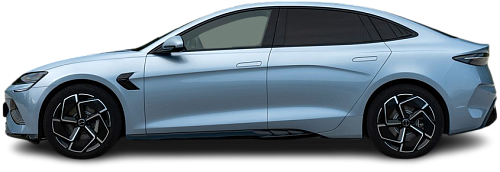
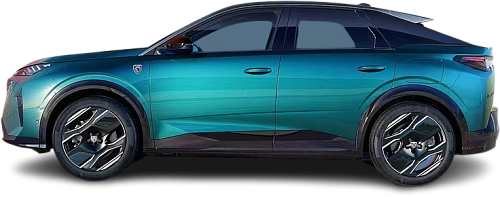
USA EV Comparison: BYD Seal Design RWD vs Peugeot e-3008 73 kWh FWD
Struggling to Decide? Let AI Help!
Your AI Summary Is Ready!
General Info
While both vehicles are currently in production, they are not sold in the United States.
The BYD Seal Design RWD (2022-…) is a Sedan, whereas the Peugeot e-3008 73 kWh FWD (2024-…) is a SUV.
| Property | BYD Seal Design RWD | Peugeot e-3008 73 kWh FWD |
|---|---|---|
| Years of Production | 2022-… | 2024-… |
| Current Status | Produced | Produced |
| Country of Manufacture | China | France |
| Body Style | Sedan | SUV |
| Market Availability | EU | EU |
| GCC Score | 6.5 | 6.3 |
Range and Efficiency
The BYD Seal Design RWD (2022-…) boasts a greater real-world range, a larger battery, and superior energy efficiency compared to the Peugeot e-3008 73 kWh FWD (2024-…).
| Property | BYD Seal Design RWD | Peugeot e-3008 73 kWh FWD |
|---|---|---|
| Range (WLTP) | 354 mi | 326 mi |
| Range (GCC) | 301 mi | 255 mi |
| Battery Capacity (Nominal) | 84 kWh | 77 kWh |
| Battery Capacity (Usable) | 82.5 kWh | 73 kWh |
| Efficiency per 100 mi | 27.4 kWh/100 mi | 28.6 kWh/100 mi |
| Efficiency per kWh | 3.65 mi/kWh | 3.49 mi/kWh |
| Range and Efficiency Score | 8.1 | 7 |
Charging
Both vehicles utilize a standard 400-volt architecture.
The Peugeot e-3008 73 kWh FWD (2024-…) offers faster charging speeds at DC stations, reaching up to 160 kW, while the BYD Seal Design RWD (2022-…) maxes out at 150 kW.
Both vehicles are equipped with the same on-board charger, supporting a maximum AC charging power of 11 kW.
| Property | BYD Seal Design RWD | Peugeot e-3008 73 kWh FWD |
|---|---|---|
| Max Charging Power (AC) | 11 kW | 11 kW |
| Max Charging Power (DC) | 150 kW | 160 kW |
| Architecture | 400 V | 400 V |
| Charge Port | CCS Type 2 | CCS Type 2 |
| Charging Score | 6.5 | 6.4 |
Performance
The BYD Seal Design RWD (2022-…) is rear-wheel drive, while the Peugeot e-3008 73 kWh FWD (2024-…) offers a front-wheel drive system.
The BYD Seal Design RWD (2022-…) boasts greater motor power and accelerates faster from 0 to 60 mph.
| Property | BYD Seal Design RWD | Peugeot e-3008 73 kWh FWD |
|---|---|---|
| Drive Type | RWD | FWD |
| Motor Type | PMSM | PMSM |
| Motor Power (kW) | 230 kW | 157 kW |
| Motor Power (hp) | 308 hp | 211 hp |
| Motor Torque | 266 lb-ft | 253 lb-ft |
| 0-60 mph | 5.7 s | 8.4 s |
| Top Speed | 112 mph | 106 mph |
| Performance Score | 4.5 | 3.6 |
Dimensions
The BYD Seal Design RWD (2022-…) has a longer body, while the Peugeot e-3008 73 kWh FWD (2024-…) stands taller, offering a more elevated ride. Their widths are almost identical, so both offer a similar amount of shoulder room.
The BYD Seal Design RWD (2022-…) boasts a more extended wheelbase.
| Property | BYD Seal Design RWD | Peugeot e-3008 73 kWh FWD |
|---|---|---|
| Length | 189 in | 178.7 in |
| Width (with Mirrors) | 84.6 in | 74.6 in |
| Width (w/o Mirrors) | 73.8 in | 74.4 in |
| Height | 57.5 in | 64.6 in |
| Wheelbase | 115 in | 107.8 in |
Cargo and Towing
A frunk (front trunk) is available in the BYD Seal Design RWD (2022-…), but the Peugeot e-3008 73 kWh FWD (2024-…) doesn’t have one.
The Peugeot e-3008 73 kWh FWD (2024-…) is better suited for heavy loads, offering a greater towing capacity than the BYD Seal Design RWD (2022-…).
| Property | BYD Seal Design RWD | Peugeot e-3008 73 kWh FWD |
|---|---|---|
| Number of Seats | 5 | 5 |
| Curb Weight | 4597 lb | 4592 lb |
| Cargo Volume (Trunk) | 14.1 ft3 | 18.4 ft3 |
| Cargo Volume (Max) | - Cargo Volume (Max) | 52.3 ft3 |
| Cargo Volume (Frunk) | 1.9 ft3 | - Cargo Volume (Frunk) |
| Towing Capacity | 1653 lb | 2756 lb |
| Cargo and Towing Score | 5.3 | 6.7 |